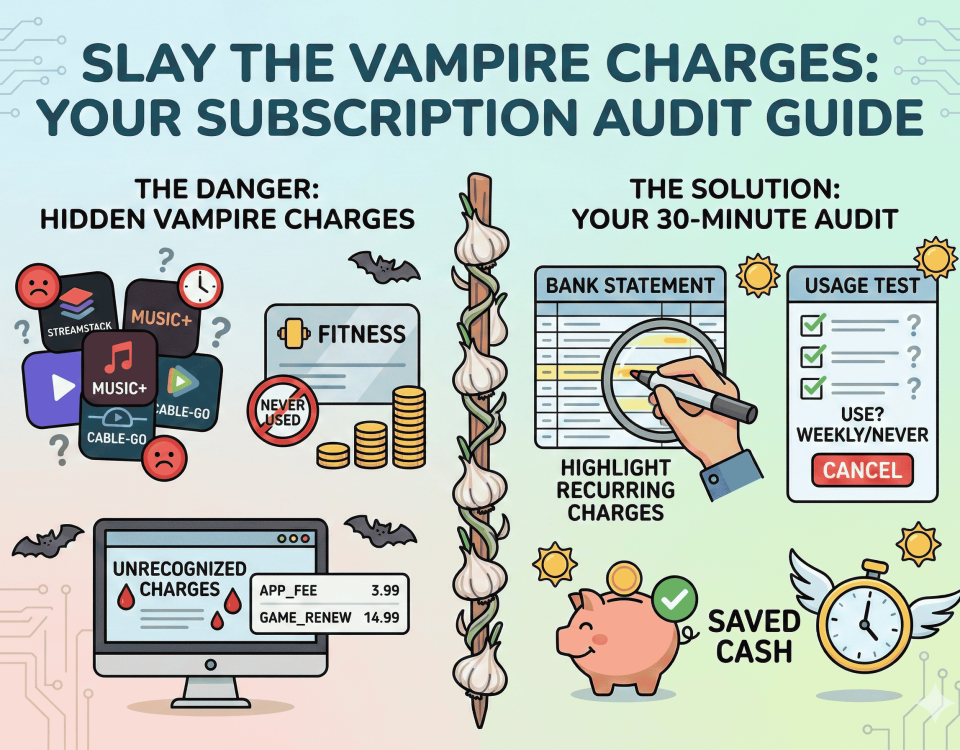

The True Cost of Subscriptions: Finding “Vampire” Charges
February 12, 2026
Slay the Monthly Subscription Monster: Why Bitwarden Rules the Open Source Password Game (And Who Might Be Creeping Up)
March 10, 2026The tax season doesn't have to be a source of dread. For small business owners, freelancers, and side-hustlers, the secret to a stress-free April is understanding deductions.
Every dollar you "deduct" is a dollar of your income that the government doesn't tax. In essence, the IRS is subsidizing your business expenses, but only if you keep the receipts and know what to look for.
Here is your essential Small Business Expense Deduction Checklist to ensure you aren’t leaving money on the table.
🏠 The Home Office & Operations
If you work from home, this is often your biggest potential win.
-
Home Office Deduction: You can deduct a portion of your rent/mortgage, utilities, and insurance based on the square footage of your dedicated office space.
-
Pro Tip: The "Simplified Method" allows you to claim $5 per square foot (up to 300 sq ft) without tracking every utility bill.
-
-
Internet & Phone: If you use your personal phone or home Wi-Fi for business, you can deduct the percentage of the bill used for work.
-
Office Supplies: Everything from the printer ink and paper to that new ergonomic chair or the "Mr Adam Smith" branded pens.
-
Software & Subscriptions: Your accounting software, CRM, web hosting, and even that "Pro" version of a design tool you use for client work.
💻 Tech & Equipment
The tools of your trade are fully deductible, but how you deduct them depends on their lifespan.
-
Computers & Hardware: Laptops, monitors, external drives, and even Raspberry Pi servers for your self-hosted projects.
-
Small Equipment: Tools under $2,500 can often be "expensed" immediately rather than depreciated over years (thanks to the De Minimis Safe Harbor election).
-
Repairs & Maintenance: Keeping your tech running—like replacing a cracked laptop screen—is a direct business expense.
🚗 Travel & Transportation
Getting to the job is just as important as doing the job.
-
Mileage: The IRS standard mileage rate for 2026 is usually the easiest way to deduct vehicle costs. Keep a log of every business-related trip.
-
Travel Costs: If you travel away from home for a conference or a client meeting, your airfare, hotels, and even Uber rides are 100% deductible.
-
Business Meals: When you’re traveling or meeting a client for a business-related discussion, you can typically deduct 50% of the meal cost. (Note: Keep the receipt and write the name of the person you met on the back).
🎓 Education & Professional Growth
Investing in yourself is investing in the business.
-
Certifications & Exams: Fees for exams like the CompTIA A+ or other industry-specific certifications are deductible.
-
Books & Courses: Professional development books, online courses, and seminars that maintain or improve your skills in your current field.
-
Professional Dues: Membership fees for professional organizations or local networking groups.
🛡️ Professional Services & Insurance
The "boring" stuff that keeps you legal and safe is also a tax break.
-
Legal & Professional Fees: What you pay your accountant to file your taxes or your lawyer to review a contract.
-
Business Insurance: General liability, professional indemnity, or even specific equipment insurance.
-
Marketing & Advertising: The cost of your blog hosting, Google Ads, and even the "Directory & Info" logo design services you’ve purchased.
The "Golden Rules" of Claiming Deductions
-
Ordinary and Necessary: The IRS defines a deductible expense as one that is both ordinary (common in your industry) and necessary (helpful for your business).
-
Separate Your Finances: Never mix personal and business bank accounts. It makes an audit 10x more painful.
-
Digital Paper Trail: Use an app to scan receipts immediately. Physical receipts fade, but a PDF in your cloud storage lasts forever.
-
When in Doubt, Ask: This checklist is a guide, but a qualified CPA can find niche deductions specific to your state (like California) or industry that can save you thousands.