

Self-Hosting 101: Reclaiming Your Data with Nextcloud
January 2, 2026
The “Copy-Paste” Cure: How to Create Templates to Save Hours Every Week
February 1, 2026We’ve all been there. You download a fancy budgeting app, spend three hours syncing your bank accounts, and vow that this is the month you’ll finally track every latte, taco, and Netflix subscription.
Then, reality hits. You forget to log a cash tip. You buy something at a convenience store and lose the receipt. By day fifteen, you’re so overwhelmed by the sheer data entry of your own life that you delete the app and go back to "vibe-based" banking—where you just check your balance at the ATM and hope for the best.
What is the Anti-Budget?
The Anti-Budget (often called the "Pay Yourself First" method) flips the traditional accounting model on its head. Most people follow this formula:
Income - Expenses = Savings
The problem? By the time you get through your expenses, there’s usually nothing left for the "Savings" part. The Anti-Budget changes the math to:
Income - Savings = Spendable Income
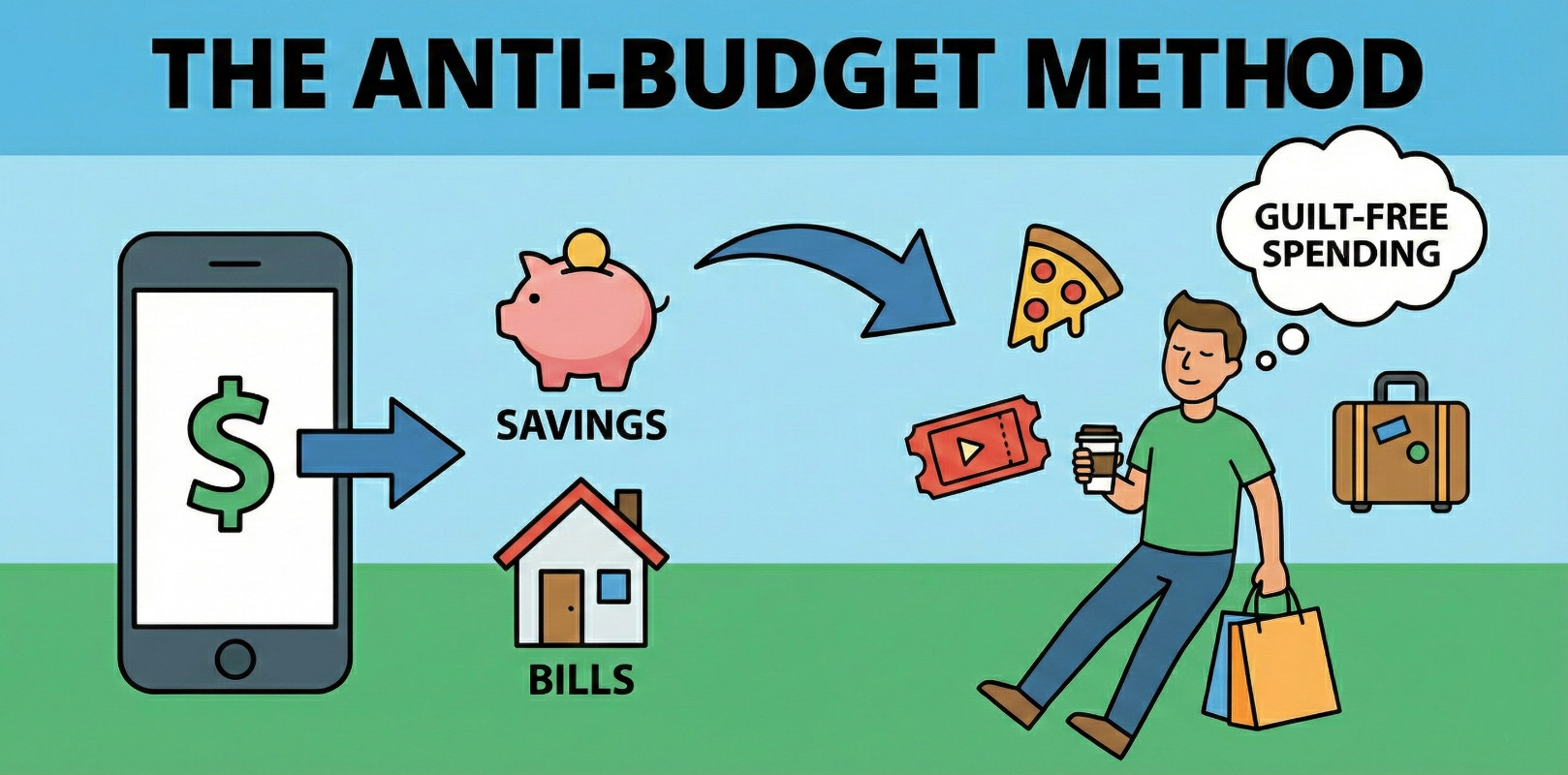
Instead of tracking where your money went, you decide where it’s going the second it hits your account. Once your savings and bills are covered, the rest of the money is yours to spend however you want, guilt-free. No categories, no tracking, no stress.
How to Set It Up in 3 Steps
The beauty of this method is that it only takes about 30 minutes to set up, and after that, it runs on autopilot.
1. Identify Your "Big Rocks"
First, you need to know your "Fixed Costs." These are the non-negotiables that keep your life running:
-
Rent or Mortgage
-
Utilities (Power, Water, Internet)
-
Insurance
-
Minimum Debt Payments (Student loans, car notes)
Total these up. This is the money that has to leave your account every month just so you can exist.
2. Choose Your Savings Number
This is where you "Pay Yourself First." Decide on a percentage or a flat dollar amount you want to save. Whether it’s 10%, 20%, or just $200 a month, this is the money for your future self (Emergency fund, Roth IRA, or that vacation to Japan).
3. Automate the "Exodus"
This is the secret sauce. Set up your direct deposit or bank transfers so that as soon as your paycheck lands:
-
The Savings go to a separate high-yield savings account (preferably at a different bank so you aren't tempted to "borrow" from it).
-
The Fixed Costs go into a "Bills" checking account.
-
The Remainder stays in your primary checking account.
The "Guilt-Free" Zone
Once those transfers happen, the money left in your primary account is your Spending Money.
Do you want to spend it all on expensive organic blueberries and vintage vinyl? Go for it. Do you want to take a last-minute road trip? Do it. Since you’ve already secured your savings and covered your bills, you don't need to track whether you spent $40 on "Dining Out" or $40 on "Hobby Supplies." It’s all just "Spending Money."
This eliminates decision fatigue. You no longer have to ask, "Can I afford this?" You just look at your one account balance. If the money is there, you can afford it. If it isn't, you wait until the next paycheck.
Why This Saves You Time and Sanity
The traditional way of budgeting is a part-time job. It requires constant vigilance and a level of perfection that most humans can't maintain. The Anti-Budget is a time-saver because it moves the effort to the front of the month.
You stop being a digital bookkeeper and start being a person who just lives their life. You also save money more effectively because the savings happen before you have a chance to spend them on a midnight Amazon spree.
Is the Anti-Budget for You?
This method works best for people who have a relatively stable income and whose basic expenses are lower than their total take-home pay. If you’re living on a very tight margin where every dollar truly counts toward survival, you might need a more granular "Zero-Based Budget" for a while.
But for the rest of us—the freelancers, the techies, and the busy professionals—the Anti-Budget is a breath of fresh air. It treats you like an adult, secures your future, and gives you back the most precious resource of all: your time.